Toggle Mobile Menu

Little has changed at Dunn Vineyards since its founding in 1979…

Iconoclasm and doing things the “Dunn way” are synonymous in this pocket of Angwin on Howell Mountain. Three generations into a family business that has continued to make truly classic California Cabernets for over 45 years has not come without its challenges. There remains an untouched feeling to this place, hidden, just down the road from shiny new wineries full of fancy winemaking equipment. Rustic and bordering on industrial, this driveway, where old-school remains today’s way of life, is where you’ll find us.

rows or vines in a vineyar rusted truck in a field

Little has changed at Dunn Vineyards since its founding in 1979…

Iconoclasm and doing things the “Dunn way” are synonymous in this pocket of Angwin on Howell Mountain. Three generations into a family business that has continued to make truly classic California Cabernets for over 45 years has not come without its challenges. There remains an untouched feeling to this place, hidden, just down the road from shiny new wineries full of fancy winemaking equipment. Rustic and bordering on industrial, this driveway, where old-school remains today’s way of life, is where you’ll find us.

rows or vines in a vineyar rusted truck in a field
vineyard buildings
“I could have done it differently. It's just the level of crap I want to put up with.”
- Randy Dunn
Lori and Randy Dunn purchased 14 acres on Howell Mountain in 1978, with five acres of Cabernet Sauvignon vines already planted situated at 2,000 feet of elevation, ready to use for the 1979 vintage. Randy was making wine on the valley floor and recalls the distinct quality to the land, “I thought it was pretty and that I could make some good wine.”
tall tree in vineyard

After striking a handshake deal with the owner of a neighboring parcel, one wine was produced in Dunn’s first year—660 9-liter cases of 1979 Dunn Vineyards Howell Mountain Cabernet Sauvignon, which were sold via newsletter in 1981 detailing the familial origins and struggles of the project.

In 1982, Dunn Vineyards' Napa Valley Cabernet was introduced as an additional bottling, encapsulating the plush, fruit-driven characteristics of Napa Valley’s floor in contrast to the tannin-laced, mineral Howell Mountain wine. Both wines have always been made in an identical manner. 100% Cabernet Sauvignon. Aged 32 months in new French oak.

sign reading
grape vines

Randy and his fellow, neighboring vintners defined the Howell Mountain AVA in 1983, above the fog line at 1,400 feet, where overall cooler temperatures but more hours of sunlight foster vines with smaller, thicker-skinned berries and yield wines of abundant structure. All of Dunn’s vineyards sit between 1,850 and 2,100 feet of elevation with primarily eastern exposures, reducing the risk of frost. With yields averaging fifty percent of the valley floor’s, Howell Mountain has definitively low vigor due to its meager, shallow soil.

Now more than ever, the goal is to keep vines healthy and in the ground longer. Since 2016, organic practices have been deployed to manage pests and disease. Regenerative agriculture is now the focus, increasing the biodiversity in and around our vineyards, as our future as a winery is indelibly tied to the health of our vines and the forest that surrounds them.

The Vineyards

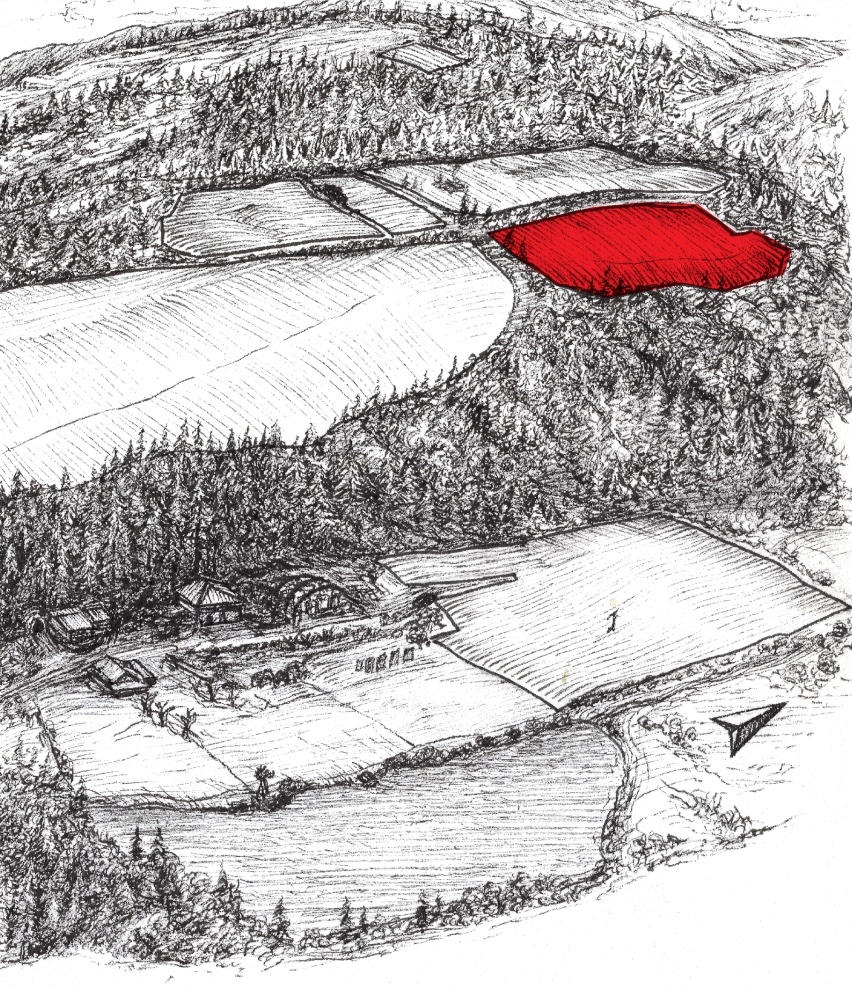
“Alta Tierra,” formerly known as the “Trailer Vineyard,” is the original parcel that Randy and Lori purchased in 1978 with plantings from 1972. Named for the trailer that historically sat at the upward boundary of this block, the old vines were removed following the 2013 vintage. In 2012 and 2013, a barrel selection from this site was bottled separately to celebrate these old vines before it was replanted, grafted in 2016, and renamed “Alta Tierra.”
In addition to “Alta Tierra,” “Frank” has held an important role since day one, combining with Trailer for the '79 vintage. First planted in 1965, the site is eponymously named in honor of Harry Frank who, in 1979, entrusted Randy with managing his vines. Divided into two distinct blocks, “Frank” has remained under Dunn’s care since, undergoing partial replants in 1986, 1993, and 2018.
At 2100’ elevation, “Eagle Summit” is nestled between “Alta Tierra” and “Frank.” Dunn purchased this property in 2018, which was planted to two clonal selections of Cabernet Sauvignon in 2000.
In 1991, Dunn purchased “Park Muscatine,” a five-parcel aggregation of two family’s vineyards who sold 100+-year-old Zinfandel and Petite Sirah to Ridge in the ‘80s. “Cuervo” was replanted right away and named for the crows that stole the popsicle sticks used to mark the new vines. “JK,” named for the two Dunn daughters, Jennifer and Kristina, saw a replant in 1993 and was removed once again following the 2023 vintage. It is Dunn’s long-tenured vineyard manager, Raul Martinez, whose house amidst the vineyards gave “Below House” its name—it was replanted in 1998. “Coyote,” where young pups came to drink from the drip irrigation lines, was replanted in 2016. Finally, the miniscule “Creek” block, with its original head-trained vines, had its final vintage in 2024 and was replanted with "JK" in spring 2025.
For the first twenty years of the winery, what is now the “Lake” vineyard produced hay for the family’s horses adjacent to a small reservoir. Now, these eight acres, the lowest elevation site, are planted primarily to Cabernet Sauvignon in three blocks (2001, 2002, and 2003). On the vineyard’s western border sits one acre, affectionately called “Los Abuelos,” of Petite Sirah and Peloursin planted in 2005 from old vine cuttings from “Park Muscatine” for the second-generation Retro Cellars label. A small valley, this site is Dunn’s coolest, requiring a wind machine and sprinklers for frost protection.
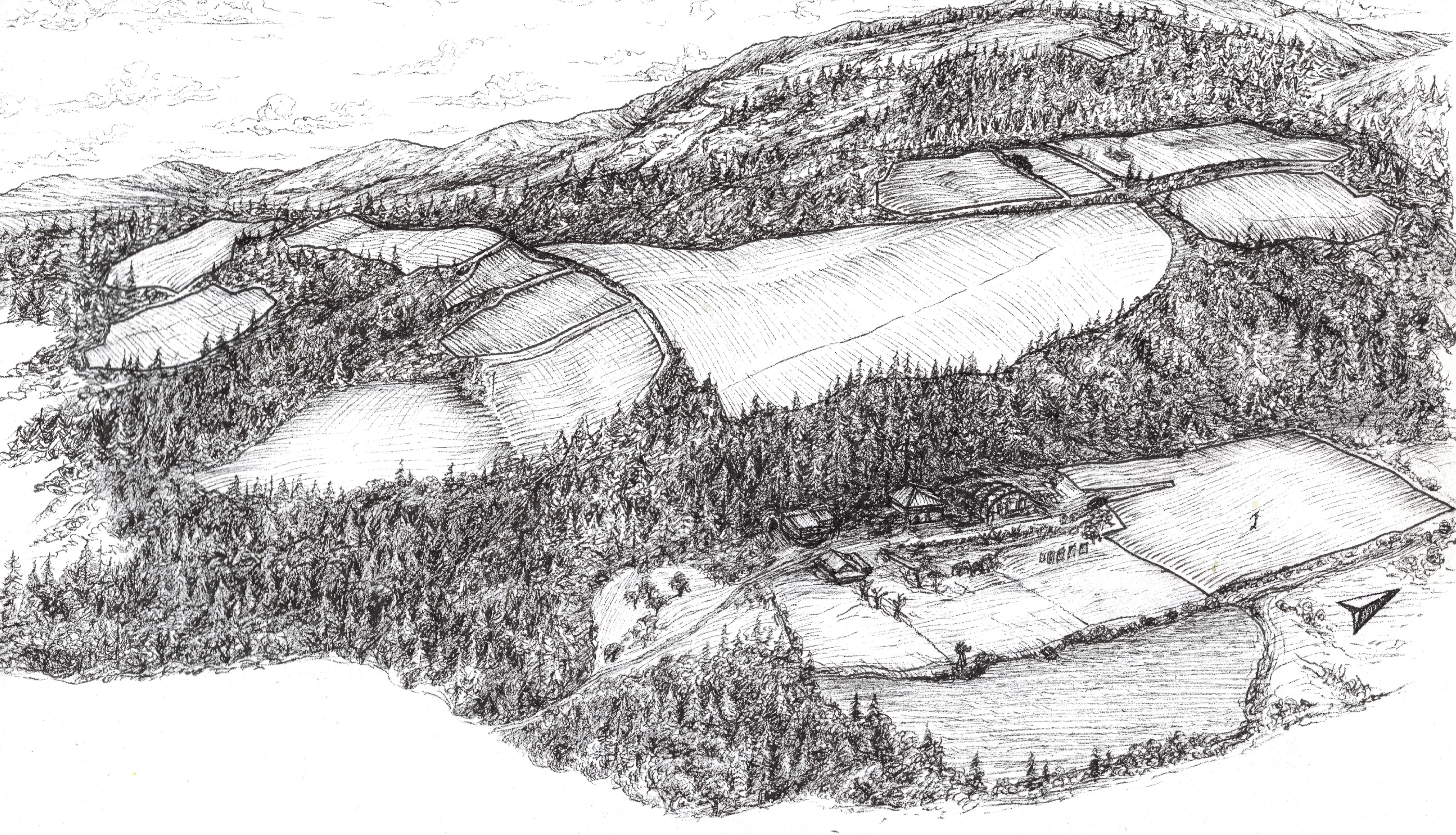
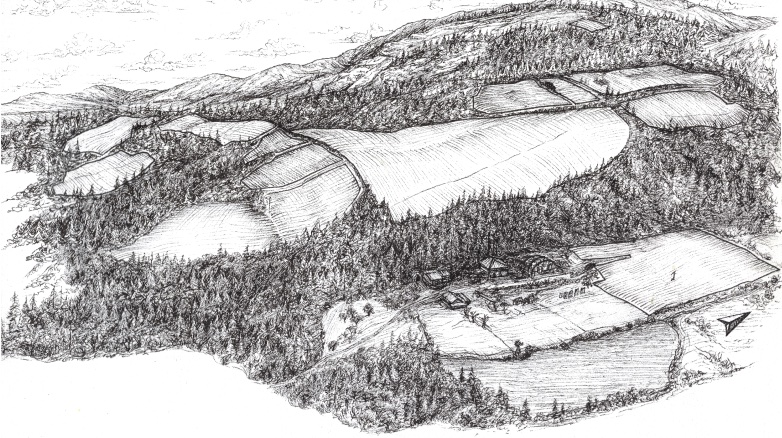
Dunn Vineyards map

All of Dunn’s vineyards sit between 1,800 and 2,100 feet of elevation with primarily eastern exposures, reducing the risk of frost. We are fortunate to own and farm 42 acres on Howell Mountain.

Explore our Vineyards

Alta Tierra,” formerly known as the “Trailer Vineyard,” is the original parcel that Randy and Lori purchased in 1978. Named for the trailer that historically sat at the upward boundary of this block, the old vines were removed following the 2013 vintage. In 2012 and 2013, a barrel selection from this site was bottled separately to celebrate these old vines before it was grafted in 2016 and renamed “Alta Tierra.”
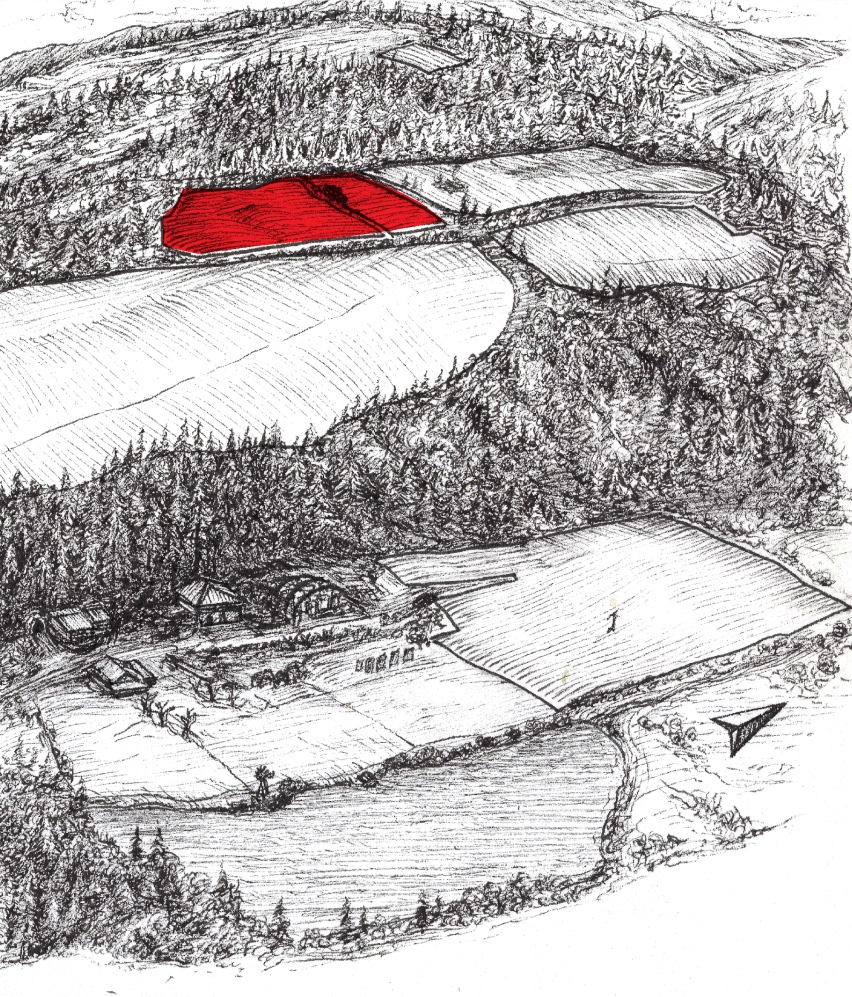
In addition to “Alta Tierra,” “Frank” has played an important role since day one. First planted in 1965, the site is eponymously named in honor of Henry Frank who, in 1979, entrusted Randy with managing his vines. Divided into two distinct blocks, “Frank” has remained under Dunn’s care since, undergoing partial replants in 1989, 1993, and 2018.
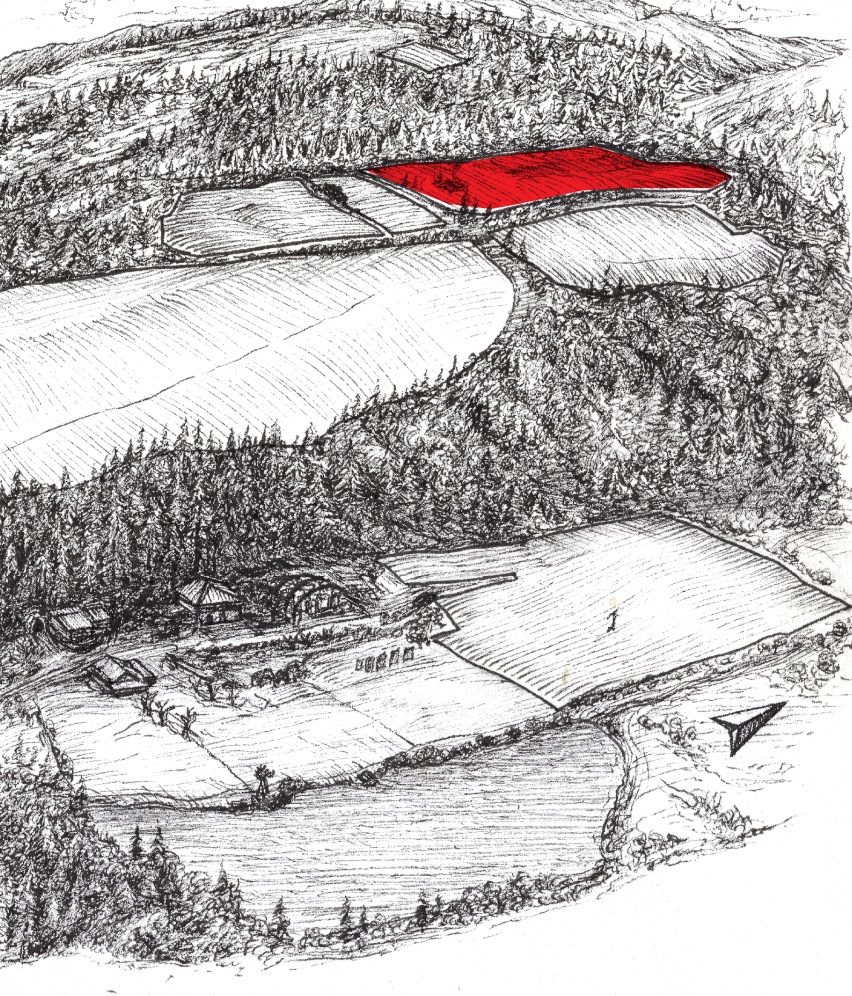
At 2100’ elevation, “Eagle Summit” is nestled between “Alta Tierra” and “Frank.” Dunn purchased this property in 2018, which was planted to two clonal selections of Cabernet Sauvignon in 2000.
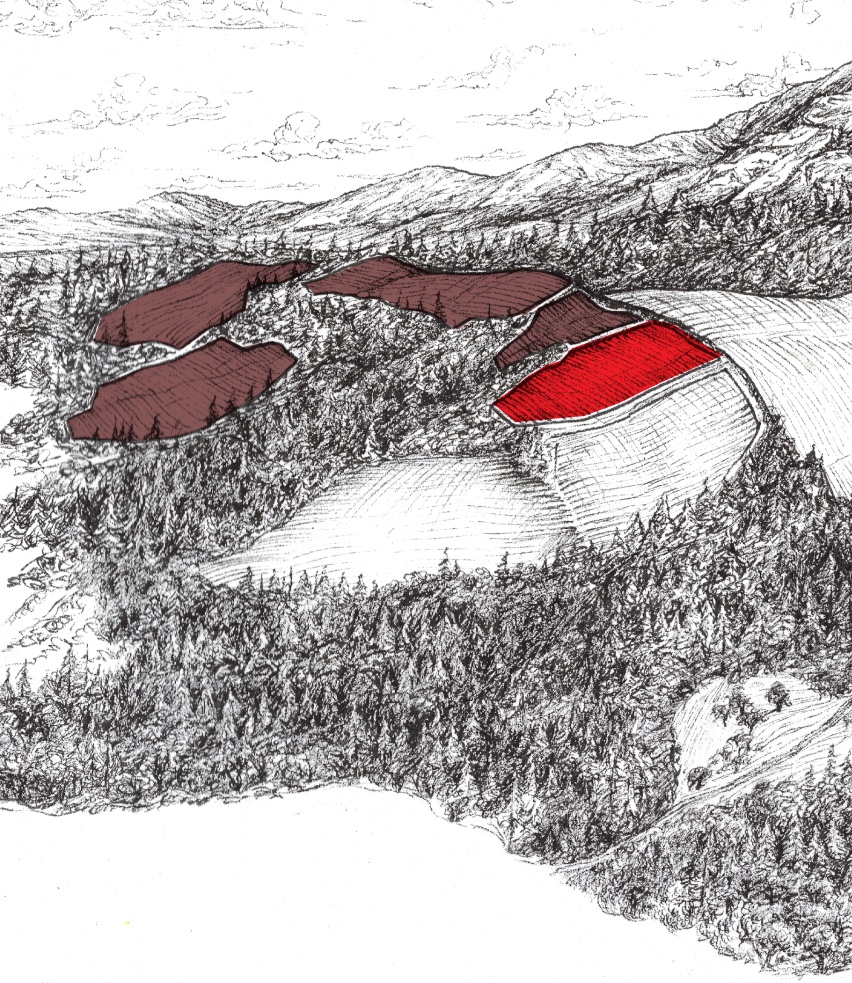
In 1991, Dunn purchased “Park Muscatine,” a five-parcel aggregation of two family’s vineyards who sold 100+-year-old Zinfandel and Petite Sirah to Ridge in the ‘80s. “Cuervo” was replanted right away and named for the crows that stole the popsicle sticks used to mark the new vines.
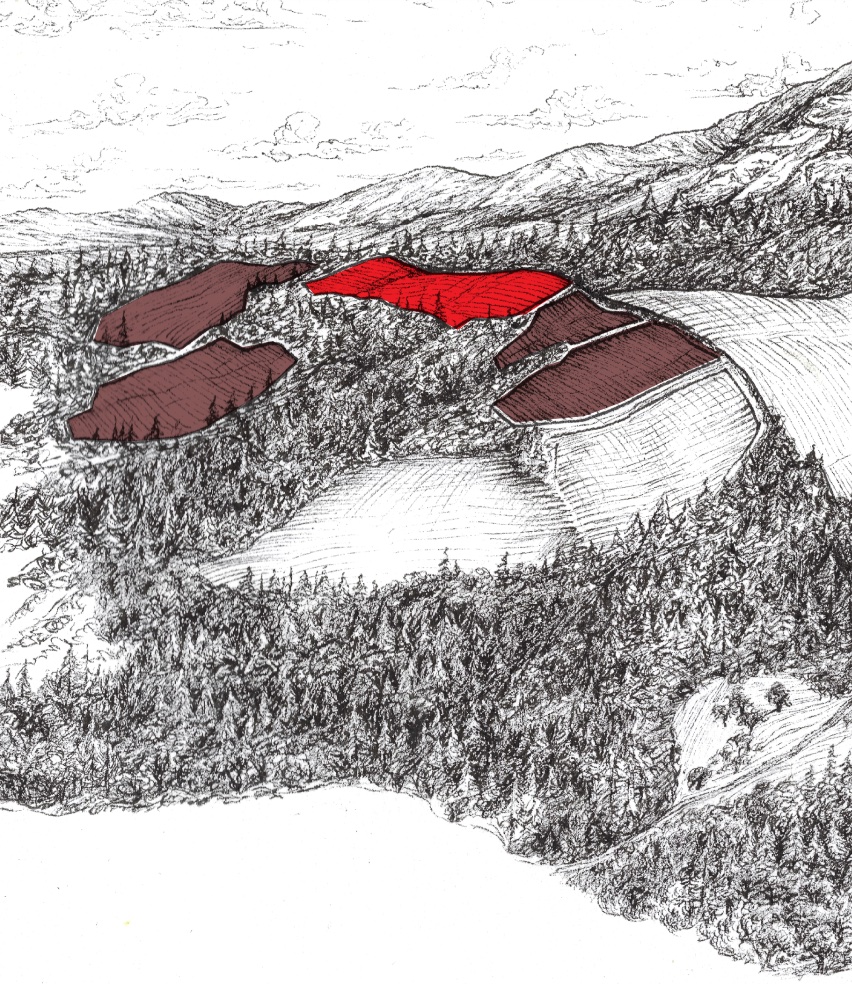
JK,” named for the two Dunn daughters, Jennifer and Kristina, saw a replant in 1993 and was removed once again following the 2023 vintage.
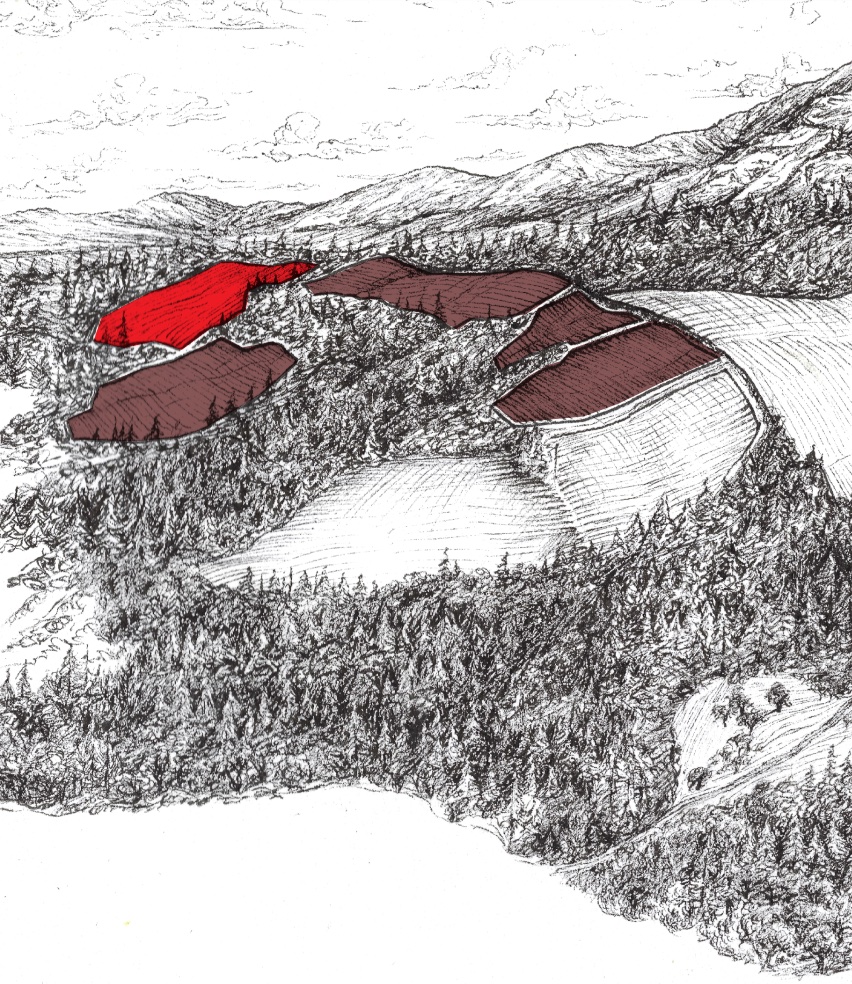
It is Dunn’s long-tenured vineyard manager, Raul Martinez, whose house amidst the vineyards gave “Below House” its name—it was replanted in 1998.
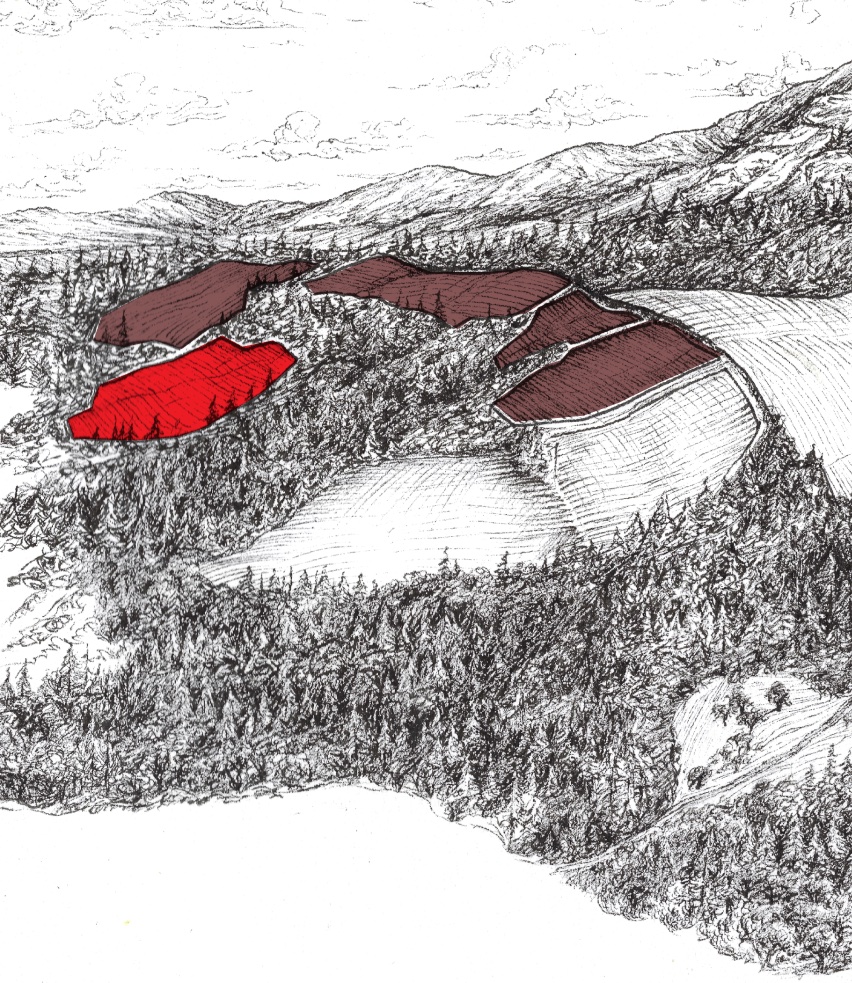
Coyote,” where young pups came to drink from the drip irrigation lines, was replanted in 2016.
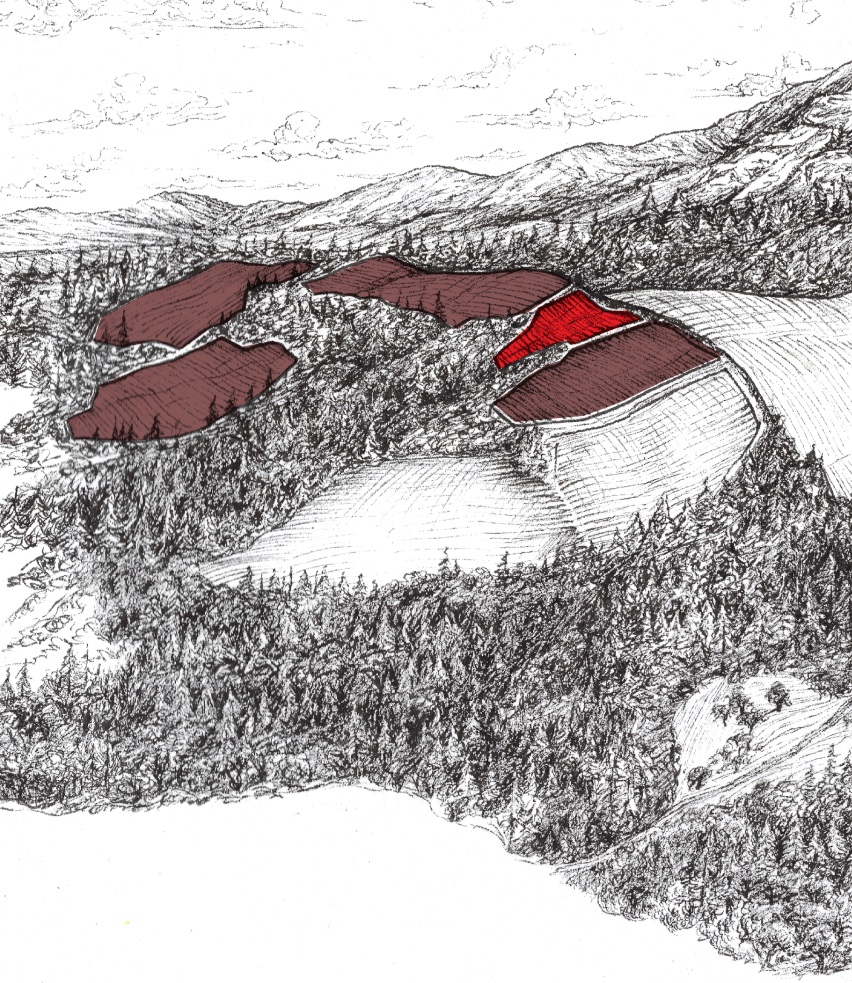
Only the miniscule “Creek” block has yet to see a replant, yet…
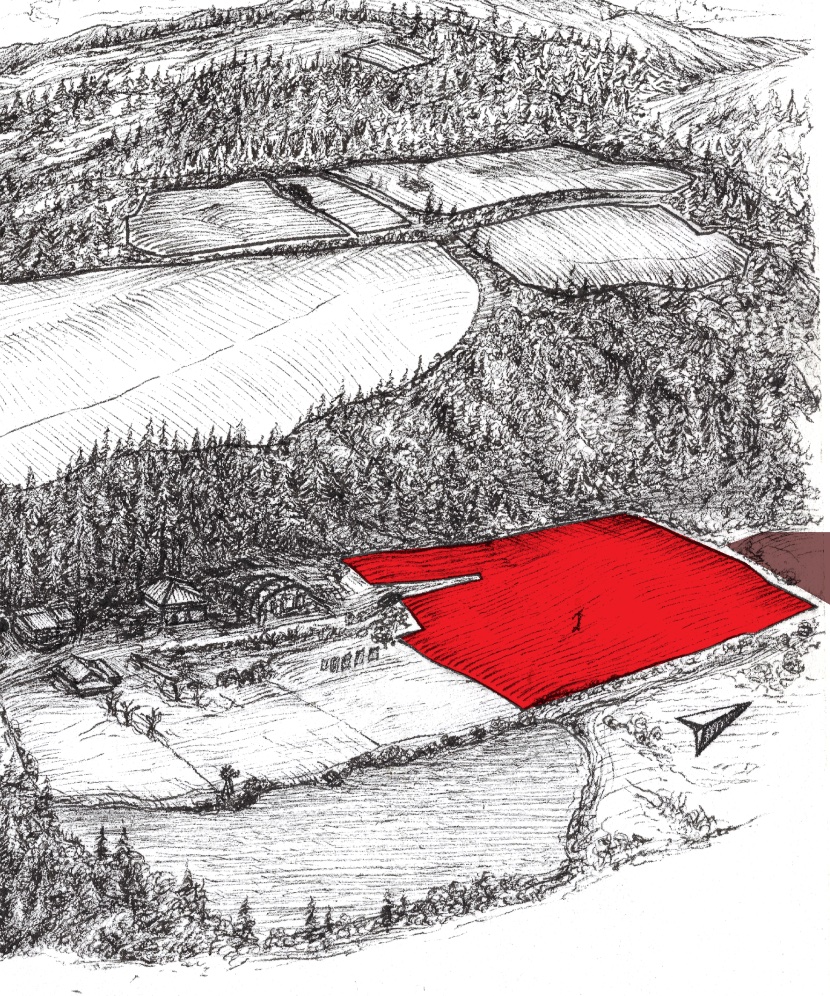
For the first twenty years of the winery, what is now the “Lake” vineyard produced hay for the family’s horses adjacent to a small reservoir. Now, these eight acres, the lowest elevation site, are planted primarily to Cabernet Sauvignon in three blocks (2001, 2002, and 2003).
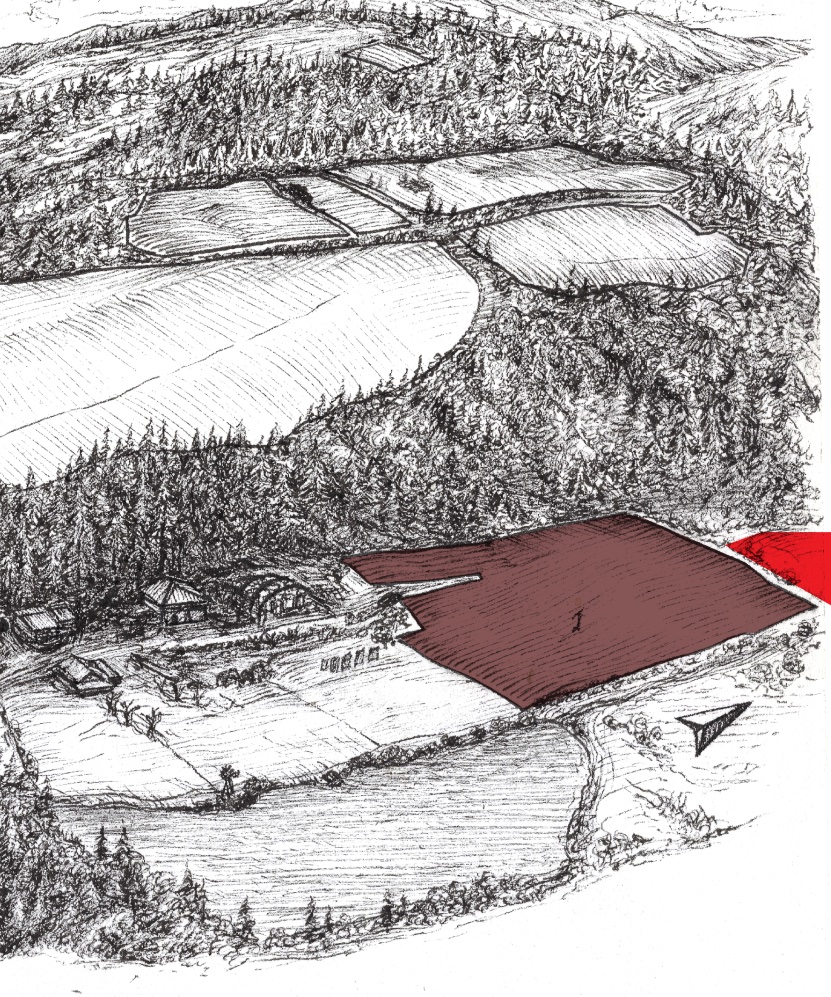
On the vineyard’s western border sits one acre, affectionately called “Los Abuelos,” of Petite Sirah and Peloursin planted in 2005 from old vine cuttings from “Park Muscatine” for the second-generation Retro Cellars label. A small valley, this site is Dunn’s coolest, requiring a wind machine and sprinklers for frost protection.

Purchasing fruit from quality grape growers for the Napa program allowed Dunn to produce more wine, given the limited acreage they owned in the early years. Now, we are fortunate to own and farm 42 acres on Howell Mountain.

fire trucks

Conservation has been a priority since the winery’s founding. There is a sense of urgency and responsibility to preserve the natural landscape of Napa Valley. There remains a constant tension between new plantings and preservation, putting tremendous pressure on the hillside and mountain wilderness above the valley floor. The Dunn Family has made significant donations over the decades to The Napa Land Trust to ensure habitats are protected, particularly in the wake of wildfire devastation.

door with initials DV
In 1989, caves were dug directly into Howell Mountain in response to Randy’s struggles with evaporative loss. The early vintages were made underneath the family’s initial residence, an 1890s Western Union stagecoach stop (still the winery’s offices), where temperature control but no humidity control existed. 6,000 square feet of caves that maintain 56˚F and 98% humidity year-round have since provided the ideal environment for making our wines, allowing for the loss of up to 1% alcohol during the prolonged aging process without losing water. Maintaining lower alcohols, specifically below 14%, is of dogmatic importance to Randy—the caves assist in achieving that goal.
wine barrels in vault
While Randy was extraordinarily loyal to a single cooperage during the first twenty years of the winery, utilizing 50% new and 50% once-used French oak barrels, an evolution has occurred in the cellar since Mike took over in 2002, with a focus on cleanliness and organization. Refreshing the cellar meant bringing in all new oak. From there, finding a lower impact barrel that imparted minimal flavor and tannin became Mike’s focus. In the intervening two decades, Mike modified the barrel program from one single cooper to now include up to eleven different cooperages in a single vintage. The lots are kept separate during the 32 months in barrel, and the wines are racked every six months, allowing the introduction of oxygen to slowly finesse the tannins during the prolonged aging.
wine barrels
“So, you all are saying to yourselves, yeah Dunn you’re an old man and on your way out. You don’t care anymore what the critics say. You’ve had your glory. Maybe you’re right. But I’ll tell you what, if we do not do something to reverse this alcoholic trend, you are going to get old and grey making the same hot, score-chasing, un-artistic wines. And, you might not even have a story to tell.”
- Randy Dunn on modern wines

People

vintage photo of people in a vineyard
Family was and always will be essential to this burgeoning operation. In the early years, Lori fielded sales requests and packaged up shipments. Their son, Mike, had daily chores related to the winery—pruning vines alongside Randy, labeling bottles, and helping in the cellar. When their two daughters, Jennifer and Kristina, arrived in the ‘80s, more hands became available for envelope stuffing and winery busywork. Though Mike left for college and went on to own a bike shop in Calistoga for most of the 1990s, it was Jennifer’s sudden passing in 1999 that brought Mike back into the family business.
vintage photo of man on a tractor
man behing machines
man driving a fork lift
“He goes on his whims. I'm orderly. He's chaos.”
- Mike Dunn on Randy
Rolls of labels on a shelf
Hanging snakeskins
Row of magazines

Without formal training as a winemaker, Mike returned to the winery and took on the challenge of revitalizing the cellar. He experimented with the old-vine Petite Sirah, cogitating ideas he hoped to apply to the Dunn wines, going on to develop his own label, a collaboration with his wife, Kara Pecota Dunn, who also came from a Napa Valley winemaking family. Together, they founded Retro Cellars in 2003, which continues to be made at the winery. Mike and Kara have two children, Alex and Tatyana. Though Taty is pursuing graduate school, Alex, a trained artist with a passion for the environment and California’s natural landscape, has been a full-time employee of the winery since 2022 and serves as our resident farmer, leading the transition to regenerative agriculture and overseeing our vineyards.

two men talking and walking

Kristina Dunn, the only formally trained winemaker in the family, spent several years in the mid-2000s encouraging visitation and marketing efforts for the winery. Residing with her husband and two daughters, Taylor and Ashlyn, atop the “Eagle Summit” vineyard, Kristina often plays mediator for the inevitable disagreements that arise from a third-generation family business.

woman smiling

After the first ten years of the winery, a few additional hands were needed. Erin Begerow has kept Dunn Vineyards running for thirty years—she is the institutional knowledge multi-generational family businesses wish they had.

Marcos Olivera and Fernando Olivera, yes, they too are family, have kept our 42 acres in order since 2005 and 2015 respectively. Marcos is a tornado of effort and perhaps the most hardworking of the winery's staff. Always smiling and meticulously organized, Fernando is a family man whose wife Elvia also assists the Dunn family. Raul Martinez was the winery's first employee. He came on in 1987 to assist Randy in the growing vineyards and continues to keep a watchful eye over harvest.

Man driving forklift
Man behind machinery
Two people
Two people
Ted Kizor

Since 2020, Ted Kizor has diligently taken over cellar duties and since 2023 has served as Dunn Vineyards’ official winemaker. After experiences abroad and stints at Ridge and Joseph Swan Vineyards, Ted came to the winery with tremendous reverence and respect for the entire family and their achievements. He tries doggedly to not screw anything up and to continue honing this diamond in the rough.

Lily Mirabelle Freedman

In 2023, Lily Mirabelle Freedman joined the winery as General Manager—the first non-family member to oversee the operation. Following many years at the leading international auction house Acker Wines and time at Colgin Cellars, Lily is keenly aware of the challenges small wineries face today. That honest perspective is essential to navigating the next decades and future generations at Dunn. With that holistic understanding of the fine wine industry, Lily steers Dunn Vineyards’ distribution, sales, and marketing, both at the winery and around the globe.

straw hat
sleeping dog
winery building
Close Credits Overlay